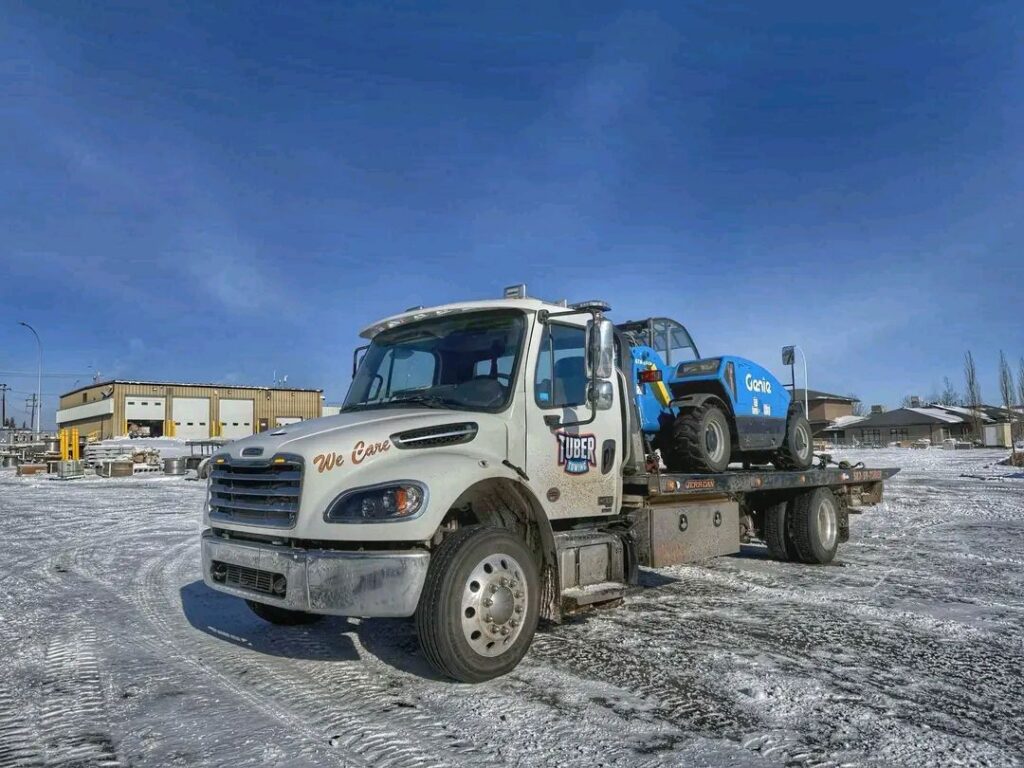
Winter Towing Edmonton is what happens when a battery gives out at −35°C, a vehicle slides into a windrow, or an all-wheel drive ends up in a ditch on the Henday. Cold changes how vehicles fail and how they have to be recovered. Tuber Towing runs 24/7 winter towing and recovery across Edmonton and the surrounding region at 587-598-8237.
Winter in Edmonton is hard on vehicles and harder on drivers. Temperatures sit below −20°C for weeks at a time, roads go from bare to glare ice inside an hour, and the failures that were merely inconvenient in September become genuine safety problems in January.
This guide covers what actually goes wrong here in winter, how professional recovery differs in cold and snow, and what you can do before the season starts to avoid needing us at all.
What This Guide Covers
- Why winter towing in Edmonton is different
- The most common winter roadside emergencies
- What to do when you are stuck or stranded
- Winter tires, and what they do not solve
- Mistakes that lead to winter tows
- Preparing your vehicle for an Edmonton winter
- Choosing a winter towing service
- Frequently asked questions
Why Winter Towing in Edmonton Is Different
Recovering a vehicle in July and recovering the same vehicle in January are not the same job.
Traction disappears for the tow truck too. A recovery unit needs grip to pull anything. On glare ice, positioning the truck so it can apply force without sliding is often the hardest part of the job, and it is why an operator may take fifteen minutes setting up before touching your vehicle.
Cold makes everything brittle. Plastic bumper covers, tie-down points, and suspension components that flex at +20°C crack at −35°C. Hooking a vehicle the standard way can cause damage that would never happen in summer, which is why a flatbed is usually the right call in deep cold.
Snow hides the hazards. A vehicle in a ditch might be sitting above a culvert, a fence line, or a drop that nobody can see. Probing before pulling is standard practice in winter and skipping it is how a recovery turns into a rollover.
Time pressure is real. In summer, a two hour wait is uncomfortable. At −35°C in a vehicle that will not run, it is a medical concern. Winter dispatch prioritises differently for that reason.
The Most Common Winter Roadside Emergencies
Dead Batteries
This is our highest volume winter call by a wide margin. A battery at −30°C delivers roughly half the cranking amps it does at +25°C, while thickened oil means the engine needs more to turn over. That is the squeeze that kills batteries on the first properly cold morning of the year.
A boost gets most vehicles going. If the battery will not hold a charge afterward, the problem is the battery or the alternator, and the vehicle needs to reach a shop rather than sit through another cold night.
Vehicles Stuck in Snow and Windrows
Edmonton’s snow clearing leaves windrows along residential streets, and drivers underestimate them constantly. A windrow that looks like loose powder is often packed hard underneath. Vehicles get high-centred on them, which means the wheels are spinning with no weight on them.
Attempting to power out usually makes it worse, packing snow harder under the vehicle and heating the tires enough to glaze the surface beneath. A winch-out from the right angle takes minutes.
Ditch Slides and Off-Road Recoveries
Icy off-ramps, the curve on Whitemud Drive, and rural range roads after a blow are where most ditch calls come from. Alberta ditches are deeper than they look under snow.
These are winching jobs, not tows. Pull angle, anchor point, and what is under the snow all get assessed first. If a commercial unit is involved, that becomes a truck recovery or trailer recovery with heavier rigging.
Flat Tires in Freezing Conditions
Cold drops tire pressure roughly 1 PSI for every 5°C, so tires that were fine in October are underinflated in December, and underinflated tires are more likely to fail. Changing one on a shoulder at −30°C with frozen lug nuts and numb hands is genuinely difficult and often dangerous. If the location is exposed or the conditions are bad, call rather than attempt it.
Collisions
Make sure everyone is safe, report the accident, and document the scene before anything is moved. Then get the vehicles cleared, because a stopped vehicle on an icy road is a second collision waiting to happen.
Lockouts and Frozen Locks
Lockouts spike in winter because people leave vehicles running to warm up and doors lock behind them. Frozen locks and frozen-shut doors are a related problem. Our car unlock service uses non-destructive entry, which matters more in cold when trim and seals are brittle.
Running Out of Fuel
Winter makes this more serious than it sounds, because a vehicle without fuel produces no heat. Keeping the tank above half is a cold weather rule, not a fussy habit. If it happens, emergency fuel delivery brings enough to reach a station.
Staying Safe and Avoiding a Winter Tow
What To Do When You Are Stuck or Stranded
- Stop trying to drive out after two or three attempts. Beyond that you are packing snow and glazing ice under the tires, which makes the recovery harder.
- Turn on your hazards immediately, especially in falling snow or blowing conditions where visibility is short.
- Stay in the vehicle on any high speed road. On the Henday, Whitemud, or Yellowhead, standing outside is far more dangerous than waiting inside.
- Check that your exhaust pipe is clear of snow before running the engine. A blocked pipe pushes carbon monoxide into the cabin. This is the single most important thing to remember in a snowbank.
- Run the engine intermittently, roughly ten minutes in every thirty, rather than continuously. It conserves fuel and reduces risk.
- Fix your location. Nearest intersection, highway number and kilometre marker, or a landmark. Dispatch needs this before anything else.
- Call 587-598-8237 and stay on the line until an arrival time is confirmed.
- Stay warm and stay visible. Layer up before you feel cold, and keep an interior light on at night so you are easier to spot.
Winter Tires, and What They Do Not Solve
Winter tires matter, and the reason is not just snow. The rubber compound in an all-season hardens below roughly 7°C and loses grip on cold dry pavement as well as ice. A winter compound stays flexible and keeps contact.
Tread pattern does the rest. Deeper sipes and channels clear slush and bite into packed snow in a way an all-season cannot. Tread depth has to be there for any of it to work, so a set of winters worn down to summer depth is not doing the job.
What winter tires do not do is make you immune. They shorten stopping distance on ice, they do not eliminate it. They will not keep you out of a ditch you entered too fast, they will not prevent a battery failure, and they will not stop a pothole from taking out a sidewall.
The most common winter towing calls we take in Edmonton involve vehicles that had proper winter tires. Overconfidence in them is itself a leading cause of tows, which is worth saying plainly.
Mistakes That Lead to Winter Tows
- Trusting the tires too much. All-wheel drive and winter tires help you go. Neither helps you stop.
- Skipping tire maintenance. Pressure drops with temperature and needs checking monthly through winter, not once in October.
- Running the tank low. Below a quarter tank you have no heat reserve if you get stranded, and condensation in the tank can cause fuel line freeze-up.
- No emergency kit. The gap between an inconvenience and a dangerous situation is usually a blanket and a shovel.
- Ignoring parking bans. Parking on a snow route during a declared ban gets vehicles towed and blocks the equipment trying to clear the street.
- Leaving a weak battery. A battery that turned over slowly in November will not turn over at all in January.
- Not clearing snow properly. Clearing a porthole in the windshield and driving off is both unsafe and a ticketable offence.
- Driving to conditions on the clock. Running late is what pushes people into driving conditions they would otherwise wait out.
Getting Ready for Winter
Preparing Your Vehicle for an Edmonton Winter
Book a pre-winter inspection in October, before the first cold snap creates a queue at every shop in the city. Ask them to check:
- Battery condition and age. Most batteries are finished at four to five years in this climate. Test rather than guess.
- Block heater and cord. Confirm the element works and the cord and plug are not damaged. A block heater takes real strain off the battery and the starter.
- Coolant freeze protection. A 50/50 mix protects to roughly −37°C. Edmonton goes colder than that some winters.
- Brakes. Stopping distance is already compromised on ice. Worn pads make it worse.
- Heating and defrost. A heater that struggles is a visibility problem as much as a comfort one.
- Winter-rated washer fluid. Summer blend freezes and can crack the reservoir. Use fluid rated to −40°C and carry a spare jug, because a single highway day in slush can empty a full tank.
- Wiper blades. Winter blades resist icing along the frame.
Keep in the vehicle from October through April: a folding shovel, ice scraper and snow brush, wool blankets or a winter sleeping bag, toque and mitts and proper boots, a lithium jump pack, traction aid such as sand or boards, a flashlight and headlamp, a charged power bank, and water and food that will not freeze solid.
Prepare yourself as well as the vehicle. Plan routes ahead, avoid the streets you know ice over first, and check conditions before leaving. Staying ahead of the weather is the best way to avoid trouble.
Choosing a Winter Towing Service in Edmonton
Save a number before you need one. Searching for a tow at −35°C on a dying phone is not when you want to be comparing options.
What to look for:
- Genuinely local. A company with trucks in the city, not a call centre routing your job to whoever answers.
- Live dispatch, around the clock. Winter emergencies are disproportionately overnight and on weekends.
- The right equipment. Flatbeds for all-wheel drive and cold-brittle vehicles, and winching capability for ditch and snowbank recoveries.
- Verified reviews and credentials. Check them in October, not from a ditch in January.
- Local knowledge. Knowing which off-ramps ice first and which range roads drift over is the difference between a fast arrival and a slow one.
Tuber Towing is locally owned and operated, and we run light and medium duty towing, heavy duty towing, and full recovery services across the region as an authorised CAA and AMA service provider.
Winter Towing Edmonton: Frequently Asked Questions
Why is winter towing important in Edmonton?
Edmonton sits below −20°C for extended stretches, and snow and ice sharply increase breakdowns and collisions. A stranded driver in that cold faces a genuine safety risk, not just an inconvenience. Winter towing gets people and vehicles out of exposure quickly and prevents secondary collisions on icy roads.
What are the most common winter roadside emergencies?
Dead batteries lead by a wide margin, followed by vehicles stuck in snow or high-centred on windrows, ditch slides on icy ramps and rural roads, flat tires from cold-related pressure loss, and lockouts caused by leaving a vehicle running to warm up.
Do winter tires mean I will not need a tow?
No. Winter tires improve grip and shorten stopping distances, but they do not prevent battery failure, potholes, or a slide entered too fast. Many of our winter calls involve vehicles with proper winter tires. Overconfidence in them is itself a common cause of tows.
What should I do if my car is stuck in a snowbank?
Stop after two or three attempts to drive out, because further spinning packs snow and glazes ice underneath. Turn on hazards, check that your exhaust pipe is clear of snow before running the engine, stay inside, and call for a winch-out.
How does cold weather affect my vehicle?
Batteries lose roughly half their cranking power at −30°C while the engine needs more to start. Tire pressure drops about 1 PSI per 5°C. Oil thickens, plastics and rubber get brittle, and summer washer fluid freezes. All of it compounds through a long cold snap.
Should I stay in my vehicle if I break down in winter?
On any high speed road, yes. Standing outside on the Henday, Whitemud, or Yellowhead is far more dangerous than waiting inside. Your vehicle is also shelter and is much easier for a driver to spot than a person.
Can Tuber Towing recover a vehicle from a ditch?
Yes. Ditch and snowbank recoveries are winching work rather than straight tows, and they need the right pull angle and anchor point to avoid further damage. For commercial units we run heavy duty recovery equipment.
Do you operate during snowstorms and extreme cold?
Yes. Dispatch is staffed 24 hours a day, 365 days a year, including through storms and extreme cold warnings. Those are the conditions that generate the most calls, so response times can be longer, and dispatch will give you a realistic arrival estimate when you call.
Winter Towing Edmonton, Any Hour
Winter towing in Edmonton is not a luxury service. It is what stands between a bad morning and a dangerous one. Prepare the vehicle in October, keep a kit in the trunk, save a number in your phone, and most winters you will never need to use it.
If you do, our dispatch line is answered 24 hours a day at 587-598-8237.
Areas we serve: Edmonton Tow Truck, Spruce Grove Tow Truck, Acheson Tow Truck, Stony Plain Tow Truck, Leduc Tow Truck
Not what you were looking for? Tuber Towing also offers the following services:
- Heavy Duty Towing
- Roadside Recovery
- Flatbed Towing
- Motorcycle Towing and Transport
- All towing and roadside services
You can also browse the areas we serve, read our guide to preparing your vehicle for long distance road trips, or contact us online for non-emergency enquiries.
Edmonton Winter Driving Resources
Check conditions before you drive. These are the official sources we watch during storms and cold snaps:
- 511 Alberta Road Reports: live highway conditions, closures, cameras, and snowplow tracking across the province.
- City of Edmonton Winter Parking Bans: Phase 1 and Phase 2 ban status, and which roads are affected.
- Edmonton Snow and Ice Control: roadways snow clearing map and residential clearing schedule.
- Environment Canada Edmonton Forecast: extreme cold warnings, snowfall warnings, and the 7 day outlook.
- Alberta Safer Winter Highways: provincial guidance on winter tires, emergency kits, and driving in snow and ice.